8 Flooring Choices That Make A Home Feel More Expensive Without Looking Overdone
Learn 8 flooring choices that make a home feel more expensive without looking overdone, from warm oak, stone tones and texture to scale, restraint and flow now.
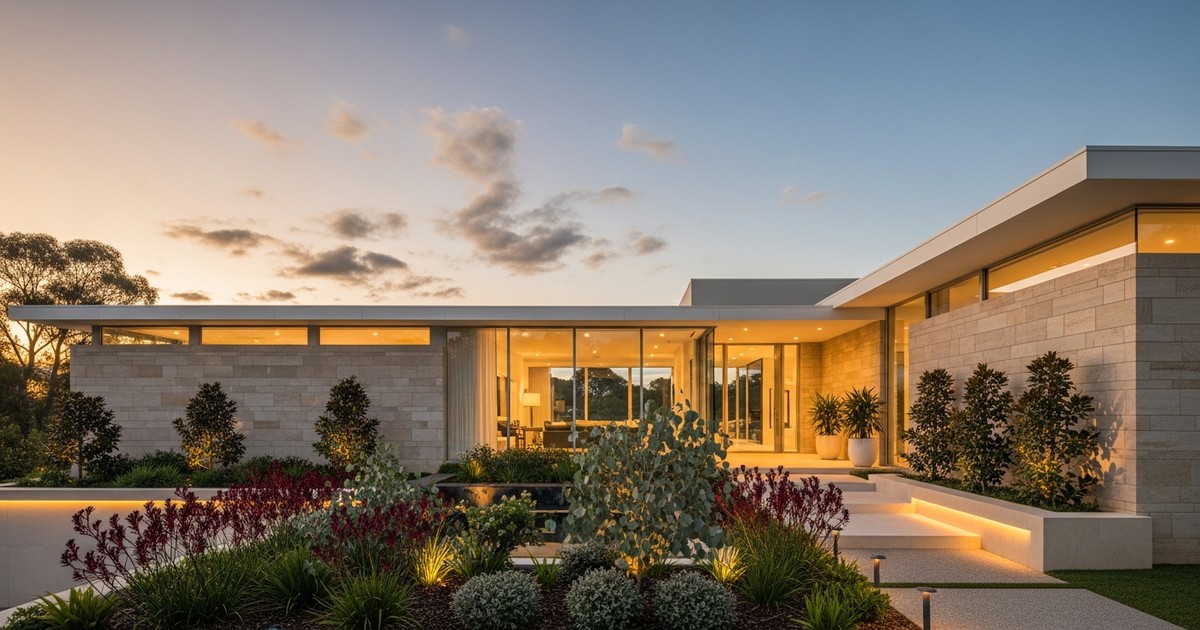
Quiet luxury flooring refers to premium floor materials specified for their texture, tone, and restraint rather than visual spectacle. In Sydney renovations, the most effective choices include honed natural stone, warm engineered timber, soft microcement, matte hybrid flooring, large-format porcelain tile, muted terrazzo, wool carpet, and brushed finish surfaces. Each delivers a high-end result through material quality and understated design rather than decorative excess.
What Is Quiet Luxury Flooring and Why Does It Matter for Sydney Homes?
Quiet luxury, as an interior design philosophy, centres on material authenticity, refined restraint, and tactile quality. It avoids the overt visual markers of wealth, such as high-gloss marble or bold patterned surfaces, in favour of finishes that signal quality through texture, proportion, and craft.
In flooring, this translates to a specific set of material and specification choices. Surfaces are matte or low-sheen. Colour palettes lean warm and neutral. Material origins are natural or convincingly natural in appearance. The overall effect is a space that feels considered and layered, rather than decorated.
For Sydney homeowners undertaking renovations, particularly in suburbs such as Mosman, Paddington, Woollahra, Killara, and the Northern Beaches, this approach aligns with current market expectations. According to the Australian Bureau of Statistics, renovation spending in New South Wales has remained consistently high, with homeowners prioritising long-term material value over short-term visual impact. The floor, as the largest continuous surface in any room, carries the most weight in establishing this tone.
The distinction that matters is this: quiet luxury flooring does not look expensive in a way that announces itself. It looks expensive in a way that feels inevitable, as though no other surface could have belonged in that room.
What Are the 8 Flooring Choices That Elevate a Home Without Looking Overdone?
The following eight materials represent the most effective specification choices for achieving a quiet luxury result in Sydney renovations. Each has been selected for its ability to deliver a premium feel without relying on decorative excess, and each has practical considerations relevant to the local market.
1. Honed Natural Stone
Honed stone, typically limestone, travertine, or marble with a matte ground finish, is one of the most established quiet luxury flooring materials. The honing process removes the reflective polish, leaving a smooth, velvety surface that absorbs light rather than bouncing it. The result is immediate visual calm.
In Sydney's renovation market, honed limestone in warm ivory or sandstone tones has become a preferred specification for entryways, open-plan living areas, and ground-floor spaces. It works particularly well in homes with heritage or transitional architecture, where the stone connects to the region's natural sandstone palette.
The critical consideration is subfloor preparation. Natural stone is unforgiving over uneven substrates. Any irregularity telegraphs through the tile. This is where professional floor levelling and concrete grinding become essential prerequisites. A honed stone installation over a poorly prepared subfloor will crack, lippage, or hollow within months. Proper specification starts below the surface.
- Finish: Honed, matte, ground surface
- Best applications: Entryways, living rooms, open-plan ground floors
- Colour direction: Warm ivory, sandstone, soft grey
- Key requirement: Precision-levelled substrate
2. Warm Engineered Timber
Warm-toned engineered timber, particularly European oak and American walnut in wide plank formats, has quietly replaced the cooler grey-washed timbers that dominated Australian interiors through the mid-2010s. The shift reflects a broader market preference for materials that feel lived-in from day one.
Wide planks, typically 190mm to 260mm, reduce visual busyness and create a sense of spatial continuity. A matte or low-sheen lacquer, or an oiled finish, preserves the timber's natural grain without adding the gloss that reads as manufactured. The warmth of honey, caramel, and natural oak tones anchors a room without competing with furniture, art, or architecture.
Engineered construction matters here. A solid hardwood plank wider than 180mm is prone to cupping and movement in Sydney's humidity swings between summer and winter. Engineered boards, with a stable plywood or HDF core and a real timber wear layer, handle the local climate with less risk. This is a specification decision that protects both the aesthetic and the long-term performance of the floor.
- Finish: Matte lacquer or natural oil
- Plank width: 190mm to 260mm preferred
- Species: European oak, American walnut, Australian blackbutt
- Climate note: Engineered construction recommended for Sydney's humidity range
3. Soft Microcement
Microcement, a hand-applied cementitious coating that creates a seamless, joint-free surface, has gained significant traction in Sydney's high-end renovation market. When executed well, it delivers the monolithic quality of polished concrete without the industrial weight or the extensive structural requirements of a poured slab.
The appeal is in its continuity. With no grout lines, no tile joints, and no visual interruptions, microcement creates a surface that flows uninterrupted across floors, up walls, and into wet areas. In matte, mineral-toned finishes, it reads as calm and architectural. It is particularly effective in bathrooms, laundries, and kitchen-to-dining transitions where a seamless surface reinforces spatial openness.
The risk, however, is in the application. Microcement is a skilled trade. Surface preparation, primer selection, coat thickness, and sealing all determine the final result. A poorly applied microcement floor will crack, delaminate, or develop surface inconsistencies within the first year. This is not a material suited to budget specification or unskilled labour. The subfloor must be sound, dry, and level before the first coat is applied, which again connects directly to the quality of the substrate preparation beneath it.
- Finish: Matte, mineral, seamless
- Best applications: Bathrooms, kitchens, open-plan living
- Colour direction: Warm grey, sandstone, soft taupe
- Critical factor: Skilled applicator and properly prepared substrate
4. Matte Hybrid Flooring
Hybrid flooring, built on a rigid stone-polymer composite core, has matured considerably since its introduction to the Australian market. Early versions carried a reputation for looking synthetic and feeling hollow underfoot. Current premium ranges have largely addressed both concerns, particularly in matte finishes with registered embossing that aligns the surface texture to the printed visual layer.
For Sydney renovators working within a defined budget, matte hybrid flooring offers a legitimate pathway to a quiet luxury result. The best products convincingly replicate European oak, wide-plank timber, and natural stone visuals. The rigid core provides dimensional stability, and the waterproof construction eliminates the moisture sensitivity that limits real timber in kitchens and laundries.
What distinguishes a premium matte hybrid from a budget one is the wear layer thickness, the realism of the registered emboss, and the acoustic performance underfoot. Products with a thicker wear layer, 0.5mm or above, and a quality acoustic underlay deliver a more substantial feel that moves the result away from “affordable alternative” and toward “considered specification.”
- Finish: Matte with registered emboss
- Wear layer: 0.5mm minimum for a premium result
- Key advantage: Waterproof, stable, and cost-effective
- Suited to: Whole-home application, including kitchens and laundries
5. Large-Format Porcelain Tile
Large-format porcelain tiles, defined as any tile with a single dimension exceeding 600mm, fundamentally change the visual density of a room. When specified in sizes such as 600x1200mm, 800x800mm, or even 1200x2400mm, the reduction in grout lines creates a cleaner, more architectural plane. The floor stops reading as a tiled surface and starts reading as a continuous material field.
In matte or natural finishes, large-format porcelain achieves the visual weight of stone with the practical advantages of a fired ceramic: resistance to staining, scratching, and moisture. This makes it particularly suitable for Sydney's open-plan ground-floor renovations, where the floor needs to carry kitchen, dining, and living zones as a single visual statement.
The installation challenge is significant. Large-format tiles demand a substrate that is level to within tight tolerances, typically 3mm over a 3-metre straightedge. Any deviation results in lippage, where adjacent tile edges sit at different heights. This is a common failure point in Sydney renovations and one that is entirely preventable through proper concrete grinding and subfloor levelling prior to installation. The tile itself may be premium, but the result is only as good as the surface beneath it.
- Sizes: 600x1200mm, 800x800mm, or larger
- Finish: Matte, natural, or lightly textured
- Colour direction: Warm concrete, limestone replica, soft grey
- Installation requirement: Substrate level to within 3mm over 3m
6. Muted Terrazzo
Modern terrazzo bears little resemblance to the bold, multicoloured surfaces of mid-century institutional buildings. The current interpretation, specified in muted, tonal palettes with fine to medium aggregate, reads as sophisticated and grounded. Think warm sand base with cream and soft grey aggregate, or a pale clay matrix with fine quartz chips. The effect is textural interest without visual noise.
Terrazzo can be specified in two formats: poured in-situ, which delivers a seamless surface but requires specialist trades and extended curing times, or as pre-cast tiles, which offer more consistent quality and simpler installation. For most Sydney renovation projects, pre-cast terrazzo tiles in a matte-honed finish provide the best balance of aesthetic quality, installation practicality, and cost control.
The quiet luxury of terrazzo lies in its restraint. When the aggregate colour stays within a narrow tonal range and the matrix colour is warm rather than stark white, the surface becomes a subtle, shifting texture that rewards close inspection without dominating the room. It is a material that works hard, resists wear, and ages with character.
- Format: Pre-cast tile for practicality, or poured in-situ for a premium result
- Aggregate palette: Tonal, muted, fine to medium grain
- Best applications: Entryways, kitchens, bathrooms, commercial-residential hybrids
- Finish: Honed matte, not polished
7. Wool Carpet
Wool carpet is the quietest material on this list, both acoustically and aesthetically. In an era of hard flooring dominance, the decision to specify wool carpet in bedrooms, studies, and upper-floor living spaces is itself an act of restraint. It signals a prioritisation of comfort and material honesty over visual trend-following.
The specification that delivers a quiet luxury result is a cut-pile or loop-pile carpet in 100 per cent wool, in heathered, undyed, or naturally pigmented tones. Greys, oatmeals, warm taupes, and natural cream all work. The key is avoiding anything that reads as a colour statement. The carpet should feel like a natural extension of the room's tonal palette, not an accent.
From a performance perspective, wool offers genuine advantages over synthetic alternatives. It is naturally flame retardant, resilient underfoot, and regulates humidity by absorbing and releasing moisture. In Sydney's climate, where summer humidity and winter dryness create seasonal swings, this is a practical benefit, not just a marketing claim. Wool carpet also contributes to acoustic comfort, reducing impact sound transmission between floors in multi-level homes. This has compliance implications in strata and multi-residential contexts, where the National Construction Code specifies minimum acoustic performance standards.
- Fibre: 100 per cent wool, cut-pile or loop-pile
- Colour direction: Heathered, undyed, naturally pigmented
- Best applications: Bedrooms, studies, upper-floor living areas
- Acoustic benefit: Reduces impact sound transmission between floors
8. Brushed Finish Surfaces
A brushed finish on timber or engineered boards creates a texture that exposes the grain pattern by removing the softer wood fibres from the surface. The result is a tactile, dimensional surface that catches light unevenly and creates visual depth without adding colour or gloss. Paired with a matte lacquer or natural oil, the brushed texture becomes the defining characteristic of the floor.
This finish serves a practical purpose beyond aesthetics. The wire-brushed texture is significantly more forgiving of everyday wear than a smooth, sanded surface. Minor scratches, pet marks, and foot traffic patterns blend into the existing grain texture rather than standing out as damage. For Sydney families renovating high-traffic areas such as hallways, living rooms, and kitchens, this is a specification that balances visual quality with long-term liveability.
The pairing that works best in the current market is a brushed European oak in a warm, natural tone with a matte oil finish. Wide planks reinforce the textural effect. The floor reads as authentic and grounded, the kind of surface that a visitor notices through touch as much as sight.
- Finish: Wire-brushed with matte lacquer or oil
- Species: European oak, blackbutt, spotted gum
- Practical advantage: Hides everyday wear and minor surface damage
- Best applications: High-traffic living areas, hallways, family homes
How Does Flooring Selection Impact Property Value and Renovation Outcomes in Sydney?
Flooring is the single largest continuous surface in any room and the specification that most directly influences how a space is perceived. In Sydney's competitive property market, flooring choices have a measurable impact on both sale price and time on market. Real estate data consistently shows that homes with well-specified, cohesive flooring throughout achieve stronger results than those with a patchwork of materials, inconsistent quality, or visibly dated surfaces.
The quiet luxury approach is particularly effective in the Sydney market because it aligns with what buyers in the upper-middle and premium segments expect: quality that is evident but not performative. A warm engineered timber floor in a renovated Paddington terrace, or a honed limestone surface in a Mosman family home, signals a level of investment and care that buyers recognise, even if they cannot name the material.
From a renovation planning perspective, flooring decisions should be made early. They affect subfloor preparation requirements, skirting and joinery details, transition heights between rooms, and acoustic treatment for upper floors. A flooring specification that looks right on a sample but has not been reconciled with the existing substrate condition will create cost overruns, delays, and compromised results.
“The most expensive flooring mistake in a Sydney renovation is not choosing the wrong material. It is choosing the right material and installing it over a substrate that was never properly assessed or prepared.”
Why Is Flooring Specification Important for NSW Compliance and Building Standards?
Flooring in New South Wales is subject to regulatory requirements that extend well beyond aesthetics. The National Construction Code, administered through the Australian Building Codes Board, sets minimum standards for slip resistance, acoustic performance, and fire safety that apply to both new builds and significant renovations.
Key compliance considerations for flooring specification in NSW include:
- Slip resistance: The standard AS 4586:2013 classifies floor surfaces by their slip resistance rating. In wet areas such as bathrooms and laundries, a minimum Pendulum Test Value or R-rating is required. Matte and textured finishes generally outperform polished surfaces in meeting these thresholds.
- Acoustic performance: In multi-residential and strata properties, the NCC requires minimum Impact Insulation Class and Weighted Sound Reduction Index values. Flooring and underlay systems must be specified and tested to meet these thresholds. Wool carpet and hybrid flooring with acoustic underlays are common solutions.
- Fire safety: Flooring materials in certain building classes must comply with AS ISO 9239.1 for critical radiant flux. This is particularly relevant in strata common areas and commercial-residential mixed-use developments.
- Asbestos and substrate assessment: In Sydney's older housing stock, particularly pre-1990 properties, subfloor conditions may include asbestos-containing materials, adhesive residues, or structural irregularities. SafeWork NSW requires licensed assessment and removal of asbestos before any flooring work proceeds. This is a non-negotiable compliance step that affects project timelines and costs.
- Consumer protection: NSW Fair Trading enforces the Australian Consumer Law provisions for home building work, including flooring installations over a specified value. Homeowners should verify that their contractor holds the appropriate licence and that work is covered by statutory warranty provisions.
Compliance is not a box-ticking exercise. It is a fundamental part of the specification process that protects homeowners from liability, ensures occupant safety, and preserves the long-term value of the renovation investment.
What Does Quiet Luxury Flooring Typically Cost in Sydney?
Cost varies significantly by material, format, and installation complexity. The details below provide indicative ranges for supply and professional installation in the Sydney market as of early 2025. All figures are in Australian dollars and exclude GST unless noted. Site-specific factors such as subfloor preparation, removal of existing flooring, access conditions, and room complexity will affect the final price.
Honed Natural Stone
- Supply: $80 to $200 per square metre
- Installed: $150 to $350 per square metre
- Durability: High
- Best suited for: Entryways, living areas
Warm Engineered Timber
- Supply: $60 to $150 per square metre
- Installed: $120 to $260 per square metre
- Durability: Medium to high
- Best suited for: Bedrooms, living rooms
Soft Microcement
- Supply: $50 to $120 per square metre
- Installed: $100 to $220 per square metre
- Durability: Medium
- Best suited for: Bathrooms, kitchens
Matte Hybrid
- Supply: $35 to $80 per square metre
- Installed: $70 to $140 per square metre
- Durability: High
- Best suited for: Whole-home, rental properties
Large-Format Porcelain
- Supply: $60 to $160 per square metre
- Installed: $130 to $280 per square metre
- Durability: Very high
- Best suited for: Open-plan living, wet areas
Muted Terrazzo
- Supply: $70 to $180 per square metre
- Installed: $140 to $300 per square metre
- Durability: Very high
- Best suited for: Entryways, kitchens
Wool Carpet
- Supply: $50 to $120 per square metre
- Installed: $90 to $200 per square metre
- Durability: Medium
- Best suited for: Bedrooms, studies
Brushed Finish Timber
- Supply: $55 to $140 per square metre
- Installed: $110 to $240 per square metre
- Durability: Medium to high
- Best suited for: Living areas, hallways
Subfloor preparation is a cost that many homeowners overlook. Concrete grinding, moisture barrier application, and floor levelling compound can add $20 to $60 per square metre to the project, depending on the existing substrate condition. For natural stone and large-format tile installations, this is not optional. It is a prerequisite for a result that lasts.
The most cost-effective path to a quiet luxury result in Sydney is typically matte hybrid flooring in a premium range, paired with proper subfloor preparation. It delivers a convincing visual result at a fraction of the cost of natural stone or engineered timber, while offering superior moisture resistance and dimensional stability.
What Are the Risks of Choosing the Wrong Flooring for a Sydney Renovation?
Flooring failures in Sydney renovations are rarely caused by the material itself. They are caused by specification errors, inadequate substrate preparation, and a failure to account for site-specific conditions. The most common risks include:
- Subfloor incompatibility: Installing a rigid material such as natural stone or large-format tile over an uneven or flexible substrate results in cracking, lippage, and hollow spots. This is the single most common flooring failure in Sydney renovations and the most expensive to rectify.
- Moisture damage: Sydney's climate, combined with the age and construction type of much of the housing stock, means moisture is a persistent risk. Timber flooring over damp subfloors will cup and warp. Microcement over improperly sealed substrates will delaminate. Moisture testing before specification is not optional.
- Acoustic non-compliance: In strata and multi-residential properties, flooring that does not meet the minimum acoustic performance standards can result in disputes, rectification orders, and costly retrofitting. Specifying the correct underlay and flooring system from the outset avoids this entirely.
- Colour and tone mismatch: A flooring material that looks right in a showroom under artificial lighting may look entirely different in a north-facing living room with natural daylight. Viewing large-format samples in situ, at different times of day, is essential to avoiding a specification that disappoints once installed.
- Budget misallocation: Over-investing in the visible material while under-investing in the invisible preparation is the classic renovation budget error. A $200-per-square-metre stone tile installed over a $10 preparation will fail. A $80-per-square-metre hybrid floor installed over a $50 preparation will perform for decades.
The pattern across all five risks is the same: the quality of the result is determined by the quality of the process, not the price of the product.
Why Choose Elyment Property Services for Flooring and Renovation in NSW?
Elyment Property Services operates as an integrated property renovation and supply business across Sydney and greater NSW. The company's approach connects material supply, subfloor preparation, installation, and project coordination within a single operational structure, eliminating the fragmentation that causes most renovation failures.
Elyment's renovation capability includes:
- Flooring supply and installation: Direct sourcing and professional installation of engineered timber, hybrid flooring, natural stone, tile, carpet, and specialty surfaces across residential and commercial projects.
- Subfloor preparation: Concrete grinding, moisture barrier application, and precision floor levelling to ensure that every installation starts from a compliant, properly assessed substrate.
- Existing flooring removal and disposal: Safe removal of old flooring materials, including assessment for asbestos-containing materials in Sydney's older housing stock, with compliant disposal.
- Adhesive removal: Mechanical and chemical removal of legacy adhesive residues from concrete and timber substrates, a critical step that many renovation contractors overlook or underprice.
- Project coordination: End-to-end management of multi-trade renovation projects, from initial material specification through to final handover, with a focus on sequencing, compliance, and quality control.
The company operates from a dedicated warehouse and showroom facility in Rouse Hill, in Sydney's North West. This allows clients to view full-format material samples, discuss specifications in person, and benefit from direct-from-stock supply that reduces lead times and eliminates third-party delays.
Elyment also maintains professional capability in property conveyancing and compliance workflows, which provides an additional layer of documentation, verification, and risk management across its project operations. This integrated model means that flooring specifications are reviewed not only for aesthetic and performance outcomes, but for their alignment with building codes, strata requirements, and warranty obligations.
For Sydney homeowners and property professionals seeking a renovation partner that controls the full chain, from substrate assessment to final surface, Elyment provides a single point of accountability across all critical stages of the project.
Plan Your Renovation With Confidence
Speak with Elyment's team about flooring specification, subfloor preparation, and full-scope renovation delivery across Sydney and NSW.
This article is intended for general informational purposes only and does not constitute professional building, legal, or financial advice. Flooring specifications, costs, and compliance requirements vary by project. Readers should obtain site-specific advice from qualified professionals before making renovation decisions. Pricing information is indicative and subject to change. Elyment Property Services operates in accordance with applicable NSW and Australian regulations.
Sources and References
Australian Bureau of Statistics, Building and Construction Data
National Construction Code, Australian Building Codes Board
Standards Australia, AS 4586:2013 Slip Resistance Classification
Standards Australia, AS ISO 9239.1 Critical Radiant Flux Testing
NSW Fair Trading, Home Building and Consumer Protection
SafeWork NSW, Asbestos Management and Licensing Requirements
Plan Your Renovation With Confidence
Speak with Elyment's team about flooring specification, subfloor preparation, and full-scope renovation delivery across Sydney and NSW.
Book ConsultationRelevant next actions
Explore the ELYMENT service most closely connected to this article.