Limewash Painter Northern Beaches: Will Salt Air and Damp Masonry Make a Mineral Finish Fail Early?
Salt air and damp masonry can trigger limewash failure. Learn what Northern Beaches owners should check before painting to prevent peeling, staining and damage.
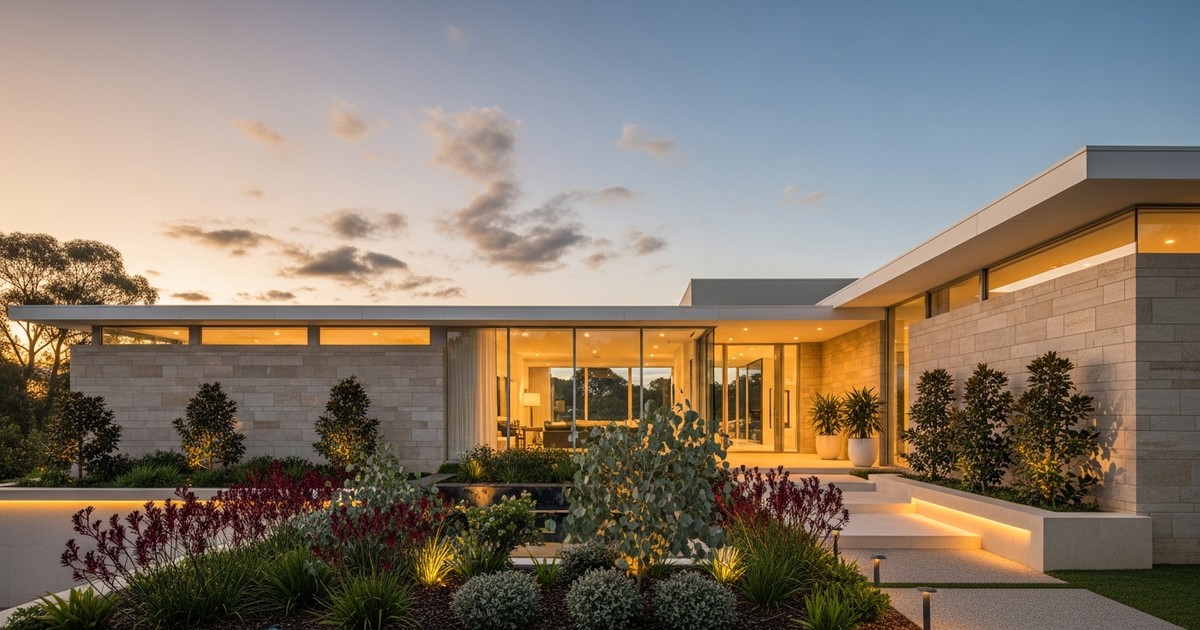
Yes. On Sydney’s Northern Beaches, salt exposure and damp masonry can shorten the life of a limewash or mineral finish if the wall is coated before its moisture pathway, salt loading and existing surface are understood. Limewash is highly vapour-permeable, but breathability does not repair failed flashings, rising damp, leaking walls or salt-damaged render. Coastal projects therefore need diagnosis, preparation and drying before colour application begins.
Limewash looks almost purpose-built for the Northern Beaches. Its soft mineral movement works with sandstone, pale render, natural timber and the muted architecture of Manly, Freshwater, Curl Curl, Dee Why, Collaroy, Narrabeen and the peninsula further north.
That aesthetic compatibility can obscure a more difficult technical question. A wall facing coastal weather is not simply a canvas. It is part of the building envelope, and it may already be carrying years of salt deposition, moisture movement, old paint, patching compounds, failed sealants and repairs.
Elyment has previously examined the rise of limewash in Sydney’s coastal design market. The more important delivery question for an actual Northern Beaches project is what happens before the first decorative coat is applied.
Salt Air and Salt Damp Are Not the Same Problem
Coastal projects become easier to diagnose once two different salt mechanisms are separated.
Airborne salt exposure
Homes close to the ocean can collect salt-laden deposits on exposed façades, parapets, balcony walls, metalwork and masonry. Wind-driven moisture can repeatedly wet these surfaces, while salt residues can remain after the water evaporates.
This may increase cleaning and maintenance requirements, particularly on highly exposed elevations. It does not automatically mean moisture is travelling through the wall from inside.
Salt travelling through masonry
A different condition occurs when water enters porous masonry, dissolves salts within the wall and transports them toward the surface. As the water evaporates, salts can crystallise as white deposits commonly described as efflorescence.
NSW environmental guidance on building in saline environments explains that salts and water can affect the durability of building materials. The practical point for a painter is that recurring salt deposits may be evidence of a moisture pathway that requires attention beyond the coating itself.
- Light residue on an exposed ocean-facing wall
- What it may indicate: Airborne coastal contamination.
- What should happen before limewash: Assess, clean appropriately, allow to dry and test the proposed system.
- White crystalline deposits repeatedly returning from masonry
- What it may indicate: Moisture transporting soluble salts.
- What should happen before limewash: Trace the moisture source before treating the decorative finish.
- Powdery or fretting render below the salt
- What it may indicate: Substrate deterioration.
- What should happen before limewash: Determine whether render or masonry repair is required.
- Damp band near ground level
- What it may indicate: Possible ground-related moisture or damp-proof-course issue.
- What should happen before limewash: Escalate for building or damp investigation rather than treating it as painting alone.
- Localised staining beneath a parapet, balcony or window
- What it may indicate: Possible flashing, sealant, drainage or water-entry defect.
- What should happen before limewash: Resolve the source and confirm drying before coating.
Breathable Does Not Mean Immune to Moisture
Traditional limewash has an important advantage on porous masonry: it is highly vapour-permeable.
The Heritage Council of NSW limewash guidance notes the value of traditional limewash where old masonry needs to release moisture. It also makes an important distinction between traditional limewash and some modern commercial products containing additives or resin binders that can alter performance.
This distinction matters on the Northern Beaches. The word limewash on a colour schedule does not, by itself, describe the vapour behaviour, substrate requirements or durability of the complete system being specified.
A project team should establish whether it is dealing with:
- A traditional lime-based wash.
- A proprietary mineral lime finish.
- A mineral silicate system.
- A decorative acrylic product designed to imitate limewash movement.
- A hybrid system containing organic binders.
These products should not be treated as technically interchangeable simply because the final wall has a similar clouded appearance.
The Failure Usually Begins Below the Colour
A mineral finish can weather attractively. Premature substrate-related failure is different.
Warning signs may include:
- Persistent white salt bloom.
- Powdering concentrated around damp areas.
- Uneven darkening that does not follow normal limewash variation.
- Soft or drummy render.
- Repeated loss of material at the bottom of walls.
- Local deterioration below windows or balcony interfaces.
- Patches where an earlier impermeable coating remains trapped underneath.
- Repairs that absorb the mineral finish completely differently from the original wall.
Efflorescence is particularly important. It occurs when moisture migrates through masonry and leaves salts at the evaporating face. If the water path remains active, cleaning the visible salt does not necessarily remove the mechanism producing it.
That is why the coating decision should follow the moisture investigation, not substitute for it.
A Northern Beaches Wall May Have Several Moisture Sources at Once
Coastal location alone should not receive the blame for every damp wall.
Before specifying limewash, a site review may need to consider:
- Wind-driven rain.
- Failed or deteriorated window perimeter seals.
- Roof or parapet flashing.
- Blocked gutters and downpipes.
- Balcony or terrace drainage.
- Failed waterproofing behind a retained wall.
- Ground levels bridging a damp-proof course.
- Plumbing leaks.
- Old cement repairs within softer traditional masonry.
- Condensation or poor ventilation.
- Previous coatings that have changed the wall's drying behaviour.
The National Construction Code treats resistance to water penetration, rising damp, drainage and weatherproofing as building-envelope issues. Its masonry weatherproofing provisions address matters such as cavities, flashings and damp-proof courses.
A decorative mineral finish should therefore not be expected to compensate for a building-envelope defect that should have been addressed elsewhere in the construction system.
Previous Paint Can Be a Bigger Problem Than the New Limewash
Many Northern Beaches renovation projects are not starting with virgin masonry.
A rendered façade may have been repainted several times. One section may contain an acrylic coating, another an old patch compound, and another a recently repaired cement render. Window surrounds may carry residual sealant contamination.
Elyment has separately examined why paint can repeatedly fail along old silicone lines beside window frames. The same investigative principle applies here: the visible failure may be telling the project team something about an incompatible material underneath.
Applying a mineral finish directly over a previously sealed wall can undermine the reason for choosing a breathable system in the first place.
The painter therefore needs to establish:
- What the existing coating appears to be.
- Whether it is sound enough to remain.
- Whether the proposed mineral system can bond to it.
- Whether removal is technically and commercially practical.
- Whether exposing the underlying wall will reveal further repair requirements.
The Correct Sequence Is More Important Than the Brush Technique
Limewash is visually associated with hand application and artisan technique. On a coastal renovation, the more consequential skill may be knowing when not to start painting.
A practical project sequence
- Map the exposure. Identify ocean-facing elevations, shaded sections, retained walls, parapets, balcony interfaces and locations exposed to repeated wetting.
- Record salt and damp patterns before cleaning. Photograph staining, efflorescence, coating loss and damaged render while the evidence is still visible.
- Investigate the water source. Determine whether the issue appears to be surface contamination, active water ingress, ground moisture, drainage, plumbing or another building-envelope defect.
- Assess the existing finish and masonry. Confirm whether the wall is bare mineral masonry, lime render, cement render, painted masonry, sandstone, brick or a mixture of previous repairs.
- Complete required repairs before decorative preparation. Waterproofing, flashing, drainage, render, sealant and masonry repairs may need different trades and different curing periods.
- Prepare and test. Once the wall is suitably stable and dry for the specified product, prepare a representative test area rather than relying on a small colour swatch alone.
- Protect the drying and application window. Coastal dew, showers, strong wind and direct exposure can affect application planning. Product technical data and actual site conditions should govern the programme.
- Record the handover condition. Photograph completed elevations and retain the product system, batch or colour information and maintenance advice for future work.
Elyment’s analysis of exterior repaint sequencing around Sydney weather explains why curing and exposure windows need to be treated as programme constraints rather than an afterthought.
What a Test Patch Should Actually Prove
A test patch on a mineral-finish project is not only for choosing between warm white and limestone beige.
A useful trial area can reveal:
- Whether the substrate absorbs the material evenly.
- Whether old repairs become visually dominant.
- Whether an existing coating interferes with bond.
- How strongly the colour changes as the finish dries.
- Whether the specified number of passes delivers the intended depth.
- How the surface behaves under direct Northern Beaches daylight.
- Whether the finished texture is appropriate for future cleaning and maintenance.
For larger homes, the test area should ideally represent the actual wall condition. A protected courtyard patch tells the project team very little about a weather-facing upper-storey façade.
When the Painter Should Stop and Escalate
One of the strongest signs of a disciplined painting operation is an installer who recognises a defect outside the decorating scope.
Painting should not simply proceed because scaffolding is booked or the colour has been approved.
Escalation may be appropriate where the team encounters:
- Active water entering the wall.
- Persistent efflorescence after earlier repairs.
- Failed or missing damp-proofing details.
- Soft sandstone or seriously fretted masonry.
- Hollow or unstable render.
- Major cracking requiring structural assessment.
- Balcony or waterproofing defects.
- Heritage fabric requiring specialised conservation advice.
In those circumstances, the decision may need input from a builder, waterproofing contractor, remedial specialist, heritage adviser or other appropriately qualified professional before the decorative programme resumes.
Coastal Preparation Also Creates WHS and Access Issues
Premium Northern Beaches façades often contain the hardest areas to reach: upper-level rendered walls, narrow side setbacks, sloping blocks, balcony faces and elevations above garages or landscaping.
SafeWork NSW identifies falls as a major construction risk and requires risks associated with working at height to be controlled. Exterior painting should therefore be planned around suitable access systems rather than improvised ladder arrangements.
Where preparation involves mechanically grinding, sanding or cutting silica-containing concrete, brick, sandstone or masonry, the work can also trigger crystalline-silica risk controls. SafeWork NSW provides specific guidance on working safely with crystalline silica.
This is another reason why “surface preparation” should be defined in the quote. Washing loose coastal residue and mechanically removing a failed cementitious coating are completely different operations.
Strata and Shared Façades Need Another Layer of Coordination
In Northern Beaches apartments and townhouses, the wall an owner wants limewashed may form part of a shared or externally controlled building element.
Before changing an exterior finish, the project may need to clarify:
- Whether the surface forms part of common property.
- Whether strata approval is required.
- Whether a building-wide colour or coating specification applies.
- Whether scaffold or elevated-work-platform access affects common areas.
- Whether balcony protection or neighbour access is required.
- Who is responsible if the inspection identifies an underlying waterproofing or façade defect.
For these projects, the painting decision quickly becomes a coordination issue involving owners, strata management, contractors and sometimes building consultants.
NSW Licensing Still Matters on a Decorative Finish
Limewash may be decorative, but the contracting framework should still be checked.
The NSW Government guidance for painting work states that a contractor licence is required for residential painting work valued above the applicable $5,000 labour-and-material threshold.
Property owners should also confirm the written scope, particularly where the price includes more than decorative application.
A coastal limewash quote may need to distinguish:
- Scaffold or access equipment.
- Salt and surface cleaning.
- Removal of old coatings.
- Render repairs.
- Crack treatment.
- Sealant replacement.
- Waterproofing or remedial work by others.
- Test areas.
- Primer or mineral base coats.
- Limewash application.
- Protection of windows, stone and landscaping.
- Return visits caused by drying or weather windows.
Why the Cheapest Limewash Quote Can Become the Expensive One
The largest cost difference between two quotations may not be the number of decorative coats.
One contractor may price a wall as a straightforward repaint. Another may have identified two days of preparation, scaffold restrictions, recurring salt deposits and a leaking parapet requiring attention before painting.
Those are not equivalent scopes.
- Scaffold or EWP access
- Why it changes the programme: Mobilisation, safety setup and access approvals become separate work packages.
- Recurring damp
- Why it changes the programme: Painting may need to pause while another trade investigates and repairs the water source.
- Failed old acrylic coating
- Why it changes the programme: Removal may be substantially more labour-intensive than ordinary washing and preparation.
- Salt-damaged render
- Why it changes the programme: Render repair and curing can push the decorative programme back.
- Multiple substrate types
- Why it changes the programme: Different preparation or compatible mineral base systems may be required.
- Restricted weather window
- Why it changes the programme: Application days may need to move rather than forcing the finish into unsuitable conditions.
Good scope definition therefore reduces the risk that the owner approves a premium finish only to discover midway through the project that the wall was never ready to receive it.
What Northern Beaches Owners Should Ask Before Approving Limewash
- Is the wall actually dry enough for the specified mineral system?
- Is the visible salt sitting on the wall, or travelling through it?
- Has the cause of recurring efflorescence been identified?
- What coating or render is currently underneath?
- Does the proposed limewash need bare mineral masonry?
- Are previous acrylic coatings being retained?
- Has a full-size test area been completed?
- Are waterproofing, render and sealant repairs included or excluded?
- Who controls scaffold, strata and neighbour access?
- What weather and drying conditions are required before each stage?
- What maintenance should be expected on the most exposed elevation?
Review the Wall Before the Mineral Finish Goes On
Assess substrate condition, coastal salt exposure, dampness, preparation, access, repair sequencing and coating compatibility before committing to a limewash or mineral finish.
The Northern Beaches Advantage Comes From Specification, Not Assumption
Limewash can be highly appropriate for Northern Beaches architecture. Its permeability, mineral character and natural variation can work particularly well with porous masonry and coastal design.
The mistake is assuming that those qualities make the finish immune to salt, damp or poor preparation.
A successful project starts by identifying what the wall is doing before trying to change what it looks like. Salt spray can require maintenance. Recurring efflorescence can reveal moisture movement. Failed acrylic layers can compromise a mineral specification. Damaged render can require repair before decoration. Waterproofing defects need to be treated as waterproofing defects.
For Northern Beaches owners, builders, designers and strata managers, that changes the procurement question. The objective is not simply to find a painter who can reproduce a limewashed sample board.
It is to engage a project team capable of deciding whether the masonry is ready for that finish in the first place.
Sources and References
- Elyment: The 2025 Rise of Limewash Paint — Coastal Elegance Meets Sydney’s Beachy Vibe
- NSW Environment: Building in Saline Environments
- Heritage Council of NSW: Limewash Guidance
- National Construction Code: Masonry Weatherproofing Provisions
- Elyment: Why Paint Keeps Pulling Away Along Old Silicone Lines Beside Sydney Window Frames
- Elyment: Exterior Repaint Sequencing Around Sydney Weather
- SafeWork NSW: Working Safely With Crystalline Silica
- NSW Government: Painting Work Licensing
- Elyment: Contact
Review the Wall Before the Mineral Finish Goes On
Assess substrate condition, coastal salt exposure, dampness, preparation, access, repair sequencing and coating compatibility before committing to a limewash or mineral finish.
Request a ReviewRelevant next actions
Explore the ELYMENT service most closely connected to this article.