What Flooring Combinations Never Go Out of Style? 13 Pairings That Define Sydney Homes
Learn 13 timeless flooring combinations that define Sydney homes, from oak and stone to wool carpet, microcement, tiles, thresholds and calm design flow ideas..
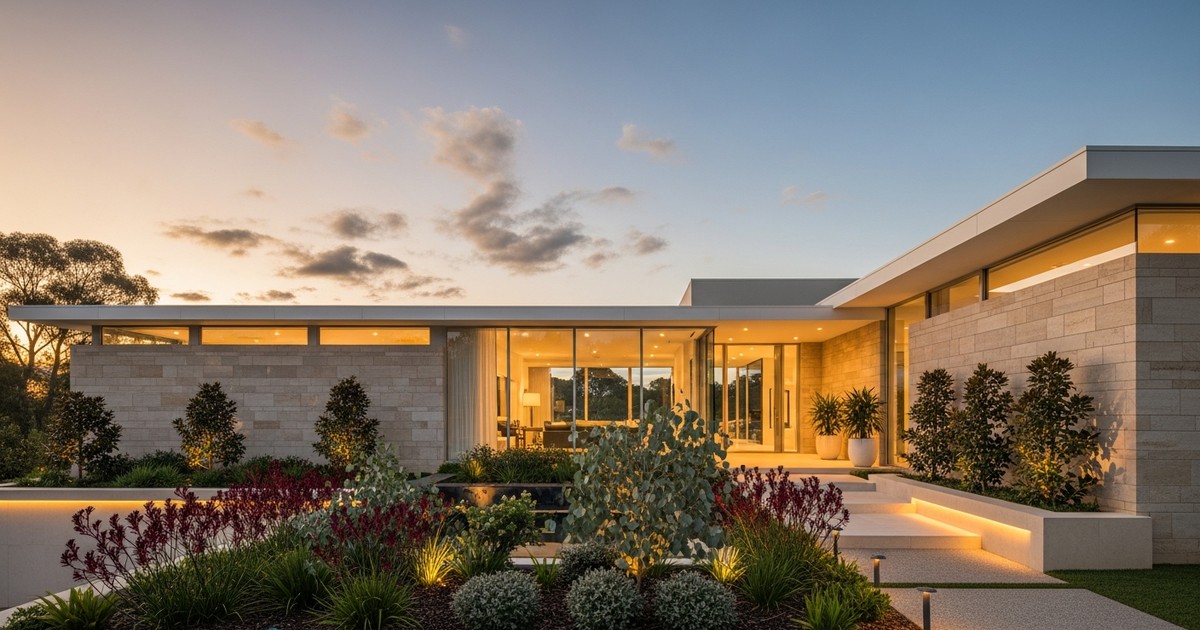
Timeless flooring combinations for Sydney homes pair natural timber with stone, polished concrete, or mineral-based surfaces, supported by neutral wall tones and textured soft furnishings. These pairings endure because they rely on proven material compatibility rather than trend-driven finishes, reducing long-term renovation costs and protecting resale appeal across NSW property markets.
Flooring is the largest continuous surface in most residential interiors. The combination a homeowner selects determines perceived property value, maintenance costs, acoustic performance, and the long-term structural integrity of the subfloor beneath it. In Sydney's competitive property market, the right pairing does more than look refined on completion day. It holds its relevance across decades of ownership.
This guide examines 13 flooring combinations that consistently perform in Sydney homes, from heritage terraces in Paddington to new-build apartments in Green Square. Each pairing is assessed on material compatibility, substrate requirements, and longevity, because the surface you walk on is only as reliable as the preparation beneath it.
What makes a flooring combination timeless in Australian homes?
A timeless flooring combination maintains visual, structural, and commercial relevance across multiple design cycles without requiring replacement or significant alteration. In the Australian context, combinations that endure share three defining characteristics:
- Material authenticity: Natural or mineral-based products such as timber, stone, terrazzo, and concrete age with character rather than degrading.
- Tonal restraint: Neutral palettes with controlled contrast avoid the dated appearance of trend-driven colour choices.
- Structural compatibility: Substrate and finish materials that behave predictably together over time, accounting for thermal expansion, moisture movement, and load distribution.
Research published by CSIRO and referenced in Standards Australia guidance confirms that material compatibility at the substrate level determines long-term performance more than the aesthetic selection of the finish floor. Timber expands and contracts with seasonal moisture cycles. Stone and porcelain remain dimensionally stable. Where these materials meet, the transition detail and the quality of the subfloor preparation below them determine whether the pairing lasts ten years or thirty.
This is why professional substrate preparation, including laser-levelled screeds, moisture testing, and adhesive selection, matters more than the brand of tile or species of timber selected. Elyment's floor levelling and substrate preparation services address this directly, ensuring every finish floor is installed on a base engineered for its specific material behaviour.
How does flooring choice affect Sydney property renovation outcomes?
In Sydney's property market, flooring is the first continuous surface a buyer, tenant, or valuer encounters. The combination chosen influences outcomes well beyond appearance:
- Perceived property value at sale or lease, with well-executed flooring combinations consistently returning higher appraisals than paint or styling alone.
- Maintenance costs over the ownership cycle, including refinishing, resealing, and grout maintenance.
- Insurance assessments for water damage, substrate movement, or failure in wet areas.
- Compliance with the National Construction Code and NSW-specific building regulations for acoustic ratings, slip resistance, and fire safety in multi-residential buildings.
Property data from Domain's property market research consistently identifies flooring as one of the top three renovation investments influencing buyer perception in Sydney, behind kitchens and ahead of bathrooms. The return on a well-chosen flooring combination, executed on a properly prepared substrate, consistently exceeds the return on aesthetic-only upgrades.
Conversely, flooring that is poorly specified or installed on an inadequately prepared subfloor is one of the most common defects flagged during pre-purchase building inspections across NSW, as documented by NSW Fair Trading.
13 flooring combinations that stand the test of time in Sydney homes
The following 13 pairings have been selected for their proven performance in Sydney's climate, property types, and renovation market. Each addresses a different design context, from coastal apartments to heritage terraces to new-build family homes.
1. European oak with honed Carrara marble
The benchmark pairing for high-end renovations in Sydney's Eastern Suburbs and Lower North Shore. European oak provides warmth and acoustic softness in living areas, while honed Carrara marble grounds entryways, kitchens, and bathrooms with cool, mineral weight. The key to longevity is matching the undertone warmth between the oak and the grey veining of the marble. Where the two materials meet, a flush transition strip set on a laser-levelled screed prevents trip points and differential movement.
Common in: Bellevue Hill, Mosman, Woollahra, Vaucluse
2. Herringbone engineered oak with natural limestone
Herringbone is a geometry that has been used in European flooring since the 16th century and remains as relevant in a renovated Paddington terrace as it does in a new-build Potts Point apartment. Paired with honed or tumbled limestone, the pattern creates visual rhythm without competing with the stone's organic texture. Herringbone installation demands a flatter substrate than straight-lay timber. Subfloor deviations beyond three millimetres over three metres will telegraph through the finished pattern.
Common in: Paddington, Surry Hills, Balmain, Hunters Hill
3. Microcement with hand-loomed wool rugs
Microcement delivers a seamless, continuous surface that works in contemporary apartments and warehouse conversions across inner Sydney. Its industrial restraint pairs naturally with the warmth and tactile depth of hand-loomed wool rugs. The substrate beneath microcement must be crack-free and moisture-tested before application, because the material is thin-layered and will telegraph any subfloor movement within months. Where moisture vapour transmission rates exceed acceptable thresholds, a vapour barrier or moisture-tolerant primer system is required before the microcement layer is applied.
Common in: Surry Hills, Darlinghurst, Alexandria, Chippendale
4. Pale whitewashed oak with linen-textured walls
The coastal Sydney aesthetic that dominates renovations from Cronulla to Palm Beach. Whitewashed or limed oak reflects natural light and expands the visual footprint of open-plan living areas. Paired with linen-textured wall finishes, the combination creates a tonal envelope that is calm, cohesive, and resistant to dating. In coastal environments, moisture control is non-negotiable. Salt-laden air and elevated humidity accelerate timber movement. Proper acclimatisation of the timber before installation, combined with a moisture-stable subfloor, is essential to prevent cupping and gapping over the first two years.
Common in: Manly, Cronulla, Avalon, Bronte, Coogee
5. Wool carpet with solid timber staircase treads
Two-storey family homes across Sydney's Hills District, North Shore, and Eastern Suburbs frequently pair wool carpet on upper-level floors with exposed or stained timber treads on the staircase. Wool provides acoustic insulation in bedrooms and hallways, while the timber staircase acts as a visual anchor linking both levels. The transition between carpet and timber at each tread requires precise fitting, with the carpet edge bound and anchored to prevent fraying and lift. Staircase treads must be assessed for structural integrity before any finish is applied, particularly in older homes where previous carpet removal may have concealed damage.
Common in: Castle Hill, Cherrybrook, Wahroonga, Roseville
6. Venetian terrazzo with white plaster and neutral linen
Terrazzo has been used in Australian architecture since the post-war period and is experiencing a measured resurgence in inner-city apartments and renovated warehouses. Venetian terrazzo, whether poured in situ or supplied as precast tiles, creates a continuous, low-maintenance surface that improves with age. Its visual density pairs best with restrained walls and furnishings: white plaster, natural linen, and minimal joinery. The substrate must be perfectly level before terrazzo is poured, as uneven bases cause pooling during installation and stress cracking over time. In multi-residential buildings, acoustic underlayments beneath terrazzo are often required to meet the minimum weighted sound reduction index specified in the National Construction Code.
Common in: Surry Hills, Redfern, Ultimo, Chippendale
7. Polished concrete with American black walnut
Warehouse conversions in Alexandria, Rosebery, and Marrickville have established polished concrete as a legitimate residential flooring choice across Sydney. Paired with American black walnut joinery, flooring inlays, or furniture, the combination balances industrial weight with organic warmth. Before concrete is polished, the slab must be assessed for moisture vapour transmission rate. Concrete slabs on or below grade, common in converted industrial properties, often carry elevated moisture levels that can cause adhesive failure, coating delamination, or efflorescence on the polished surface. Concrete grinding and moisture testing are foundational steps that determine whether the slab is suitable for polishing or requires remediation first.
Common in: Alexandria, Rosebery, Marrickville, St Peters
8. Large-format porcelain with brushed oak surfaces
Porcelain tiles in formats of 1200 by 600 millimetres or larger have become a default specification for new-build homes and major renovations across Sydney. Paired with brushed oak on vanities, kitchen joinery, or feature walls, the combination reads as clean, modern, and low-maintenance. Large-format tiles amplify any subfloor deviation. A tile of that dimension will bridge low points, rock on high points, and crack under stress if the substrate is not laser-levelled before installation. The adhesive bed must be applied in a back-buttered, full-contact method to achieve the minimum 95 per cent coverage required by AS 3958.1 for large-format tiles.
Common in: Kellyville, Rouse Hill, Macquarie Park, Zetland
9. Dark stained blackbutt with Sydney sandstone
Blackbutt is an Australian native hardwood with a rich, interlocked grain that takes dark stain well without losing its character. Paired with locally sourced Sydney sandstone in entryways, fireplaces, and outdoor transition zones, the combination connects a heritage property to its geological context. Both materials are porous and require moisture management. Sandstone in ground-floor entries must be sealed and maintained to prevent salt staining and erosion, while blackbutt requires proper acclimatisation and a controlled-moisture subfloor to prevent dimensional movement after installation.
Common in: The Rocks, Paddington, Balmain, Millers Point
10. Matte porcelain with woven jute and sisal textures
For coastal and relaxed Sydney homes, matte-finish porcelain provides a durable, slip-resistant floor surface that handles sand, salt, and high foot traffic without the maintenance demands of natural stone. Paired with woven jute or sisal rugs and natural fibre furnishings, the combination creates an organic, textural interior that resists trending in or out of fashion. Matte porcelain is specified with a slip-resistance rating appropriate for the space, particularly in wet areas adjacent to pools and outdoor showers common in Northern Beaches and Eastern Suburbs properties.
Common in: Bondi, Manly, Avalon, Cronulla, Palm Beach
11. Concrete-look porcelain with warm timber feature walls
Concrete-look porcelain delivers the industrial aesthetic of polished concrete without the maintenance requirements or substrate sensitivity of a true concrete finish. Paired with vertical timber battens or cladding on feature walls, the combination is a mainstay of new apartment developments and medium-density housing across Sydney's growth corridors. Rectified porcelain tiles demand precise substrate flatness. Even minor deviations in the screed will produce lippage between adjacent tiles, a defect that is both visible and measurable under industry standards.
Common in: Zetland, Waterloo, Green Square, Wentworth Point
12. Reclaimed recycled timber with honed aggregate concrete
Renovated workers' cottages and terrace homes across Sydney's Inner West frequently pair reclaimed timber with honed aggregate concrete in their rear extensions. The reclaimed timber carries character, variation, and history that new materials cannot replicate. The honed aggregate concrete, often used in open-plan living and dining areas that extend into courtyards, provides a durable, continuous surface that bridges indoor and outdoor zones. Both materials have irregular dimensions and behaviours that demand expert substrate preparation and flexible adhesive systems. Reclaimed timber must be assessed for residual fixings, moisture content, and structural integrity before it is specified as a flooring product.
Common in: Marrickville, Newtown, Erskineville, Stanmore
13. Limed oak with hand-cut slate
Limed oak has a pale, chalky finish that softens any interior it occupies. Paired with hand-cut slate, typically in dark charcoal or deep grey tones, the combination creates tonal contrast that defines spatial zones without physical barriers. This pairing is especially effective in larger homes on Sydney's upper North Shore and semi-rural properties in Dural and Galston, where floor areas are generous and the material combination can be experienced at scale. Slate requires a rigid, stable substrate because its irregular thickness and natural cleft surface make it susceptible to rocking and cracking on flexible or uneven bases.
Common in: Dural, Galston, Kenthurst, Berowra, Wahroonga
Why does substrate preparation matter more than the finish floor?
The most expensive flooring product installed on a poorly prepared substrate will fail within months. The least expensive product installed on a properly prepared base can perform for decades. This is not opinion. It is a principle documented across flooring industry guidance from the Australian Floor Covering Association and reflected in the defect reports of every major building inspection firm operating in NSW.
Substrate preparation for a typical Sydney flooring renovation includes:
- Moisture testing: Calcium chloride or relative humidity testing to determine the moisture vapour transmission rate of the concrete slab or screed. This determines adhesive selection and whether a vapour barrier is required.
- Flatness assessment: Measured against a three-metre straightedge. Industry standard tolerance is plus or minus three millimetres over three metres for most finish floors, with tighter tolerances required for large-format tiles and herringbone installations.
- Concrete grinding or levelling: High spots are ground down with diamond tooling. Low spots are filled with a self-levelling compound or cementitious screed. Elyment's concrete grinding and floor levelling services use laser-guided systems to achieve documented flatness tolerances before any finish floor is delivered to site.
- Magnesite and adhesive removal: Older Sydney homes, particularly those built between the 1940s and 1980s, often have magnesite flooring or residual adhesive that must be removed before new substrates can be laid. Magnesite removal requires dust-controlled extraction and disposal in compliance with NSW environmental regulations.
- Primer and sealer application: Selected based on the chosen finish floor material and the moisture profile of the substrate. A timber floor on a slab with elevated moisture requires a different primer system than porcelain tile on a dry screed.
Each of these steps directly determines whether the 13 combinations listed above will perform as intended. Skipping or shortcutting substrate preparation is the single most common cause of flooring failure in Sydney renovations.
What does flooring renovation typically cost in Sydney?
Flooring costs in Sydney vary by material, substrate condition, and the complexity of the installation. The details below provide indicative cost ranges for the combinations referenced in this guide. All figures are per square metre and exclude GST. Actual costs depend on site access, substrate remediation requirements, and material availability.
European oak + Carrara marble
- Indicative cost range: $180 to $450 per square metre
- Substrate preparation required: Screed levelling, moisture barrier, transition detailing
Herringbone oak + limestone
- Indicative cost range: $200 to $500 per square metre
- Substrate preparation required: Laser-levelled screed, adhesive selection per material
Microcement + wool rugs
- Indicative cost range: $120 to $300 per square metre
- Substrate preparation required: Crack repair, moisture testing, primer system
Pale whitewashed oak + linen walls
- Indicative cost range: $140 to $350 per square metre
- Substrate preparation required: Moisture barrier, acclimatisation protocol
Wool carpet + timber stairs
- Indicative cost range: $80 to $250 per square metre
- Substrate preparation required: Stair assessment, carpet underlay, tread levelling
Venetian terrazzo + white plaster
- Indicative cost range: $150 to $400 per square metre
- Substrate preparation required: Full-slab levelling, acoustic underlay for multi-residential properties
Polished concrete + walnut
- Indicative cost range: $100 to $300 per square metre
- Substrate preparation required: Concrete grinding, moisture testing, densifier
Large-format porcelain + brushed oak
- Indicative cost range: $120 to $350 per square metre
- Substrate preparation required: Laser-levelled screed, back-buttered adhesive method
Dark blackbutt + Sydney sandstone
- Indicative cost range: $160 to $400 per square metre
- Substrate preparation required: Moisture testing, sealing, acclimatisation
Matte porcelain + jute and sisal
- Indicative cost range: $90 to $280 per square metre
- Substrate preparation required: Screed levelling, slip-resistance specification
Concrete-look porcelain + timber walls
- Indicative cost range: $100 to $300 per square metre
- Substrate preparation required: Rectified screed, lippage control system
Reclaimed timber + honed concrete
- Indicative cost range: $130 to $350 per square metre
- Substrate preparation required: Timber assessment, flexible adhesive, grinding
Limed oak + hand-cut slate
- Indicative cost range: $150 to $400 per square metre
- Substrate preparation required: Rigid substrate build-up, moisture management
Elyment's floor levelling and concrete grinding services start from $65 per square metre, with site assessments available across the Sydney metropolitan area and Greater NSW. A scoped quote, including substrate assessment and preparation recommendations, is returned within 48 hours of receiving project details.
What are the risks of choosing the wrong flooring combination in NSW?
The wrong flooring combination does not always mean the wrong aesthetic choice. More commonly, it means a material pairing that is structurally incompatible, installed on an inadequately prepared substrate, or specified without regard for the building's moisture profile. The consequences include:
- Tenting and buckling: Timber floors installed over concrete slabs with elevated moisture levels expand unevenly, causing boards to tent at their joints. This is one of the most common flooring defects reported in Sydney's post-war housing stock.
- Tile lippage and cracking: Large-format tiles installed on substrates that do not meet flatness tolerances develop visible lippage at joints and crack under point loads. Repair requires full removal and substrate re-levelling.
- Grout discolouration and efflorescence: Moisture migrating upward through unsealed substrates causes white salt deposits on the surface of tiles and grout, particularly in ground-floor installations over concrete slabs.
- Magnesite-related failure: Residual magnesite from older flooring systems reacts with moisture and causes delamination of new substrates. Failure to remove magnesite before renovation is a documented cause of flooring defects in pre-1980s Sydney homes, as noted in guidance from NSW Fair Trading.
- Non-compliance with acoustic ratings: In strata and multi-residential buildings, flooring changes that reduce the acoustic performance below the minimum weighted sound reduction index can result in strata by-law breaches and mandatory remediation orders.
Each of these risks is preventable through proper substrate assessment, moisture testing, and specification of the correct preparation method before installation begins. The cost of preparation is consistently lower than the cost of remediation after failure.
Why choose Elyment Property Services for flooring renovation in NSW?
Elyment is a technology-enabled property services operator that owns and manages the full renovation workflow from substrate assessment through to finish-floor installation and handover. This is not a referral model. Elyment's team operates directly on site with licensed trades, laser-guided equipment, and documented compliance processes.
What this means for Sydney homeowners and property investors:
- Substrate-first methodology: Every flooring project begins with moisture testing, flatness assessment, and identification of legacy issues such as magnesite, residual adhesive, or slab defects before any finish material is specified.
- Laser-levelled preparation: Concrete grinding and self-levelling screeds are completed to documented tolerances, measured and recorded against the requirements of the chosen finish floor.
- Single-point coordination: A dedicated delivery lead manages the entire sequence from substrate remediation through to finish-floor installation, reducing handoff errors between trades.
- Audit-ready documentation: Photo-verified progress, moisture test certificates, and flatness reports are delivered at handover, giving property owners a complete record for insurance, resale, or strata compliance purposes.
- Proven track record: Elyment holds a 5-star rating on Google from clients across Sydney, reflecting consistent delivery standards across residential and investment property projects.
Elyment's floor levelling and concrete grinding services are available across the Sydney metropolitan area and Greater NSW, with site assessments typically scheduled within the same week of enquiry.
Request a Substrate Assessment
Get a scoped flooring substrate assessment and renovation plan from Elyment's licensed team. Moisture testing, flatness verification, and a documented preparation recommendation returned within 48 hours.
How should Sydney homeowners approach flooring selection for long-term value?
The 13 combinations outlined in this guide share a common foundation: they rely on natural or mineral-based materials, neutral tonal relationships, and professional-grade substrate preparation. These are not trend-driven choices. They are material relationships that have demonstrated performance across decades of Australian housing.
For Sydney homeowners planning a renovation, the process begins not with colour swatches or showroom visits, but with a substrate assessment. The condition of the existing subfloor, its moisture profile, and its flatness determine which combinations are viable, which require remediation before installation, and which must be excluded entirely.
Elyment Property Services provides this assessment as the starting point for every flooring project, ensuring that the combination selected is matched to a substrate engineered for its long-term performance. Details on Elyment's full range of flooring renovation services, including concrete grinding, floor levelling, magnesite removal, and supply-and-install flooring, are available on the Elyment website.
Sources & References
Standards Australia, AS 3958.1: Guide to the Installation of Ceramic Tiles
Australian Building Codes Board, National Construction Code (NCC) Volume Two
NSW Fair Trading, Strata building management and flooring compliance guidance
CSIRO, Building and construction materials research
Domain Group, property market and renovation investment analysis
Australian Floor Covering Association, industry installation standards and best-practice guidance
Green Building Council of Australia, sustainable material specification and indoor environmental quality standards
Relevant next actions
Explore the ELYMENT service most closely connected to this article.