Magnesite Removal Cost Sydney: Grinding, Waste & Levelling
Sydney magnesite removal costs explained: removal, grinding, waste, levelling and slab repairs. Compare indicative ranges and NSW strata requirements.
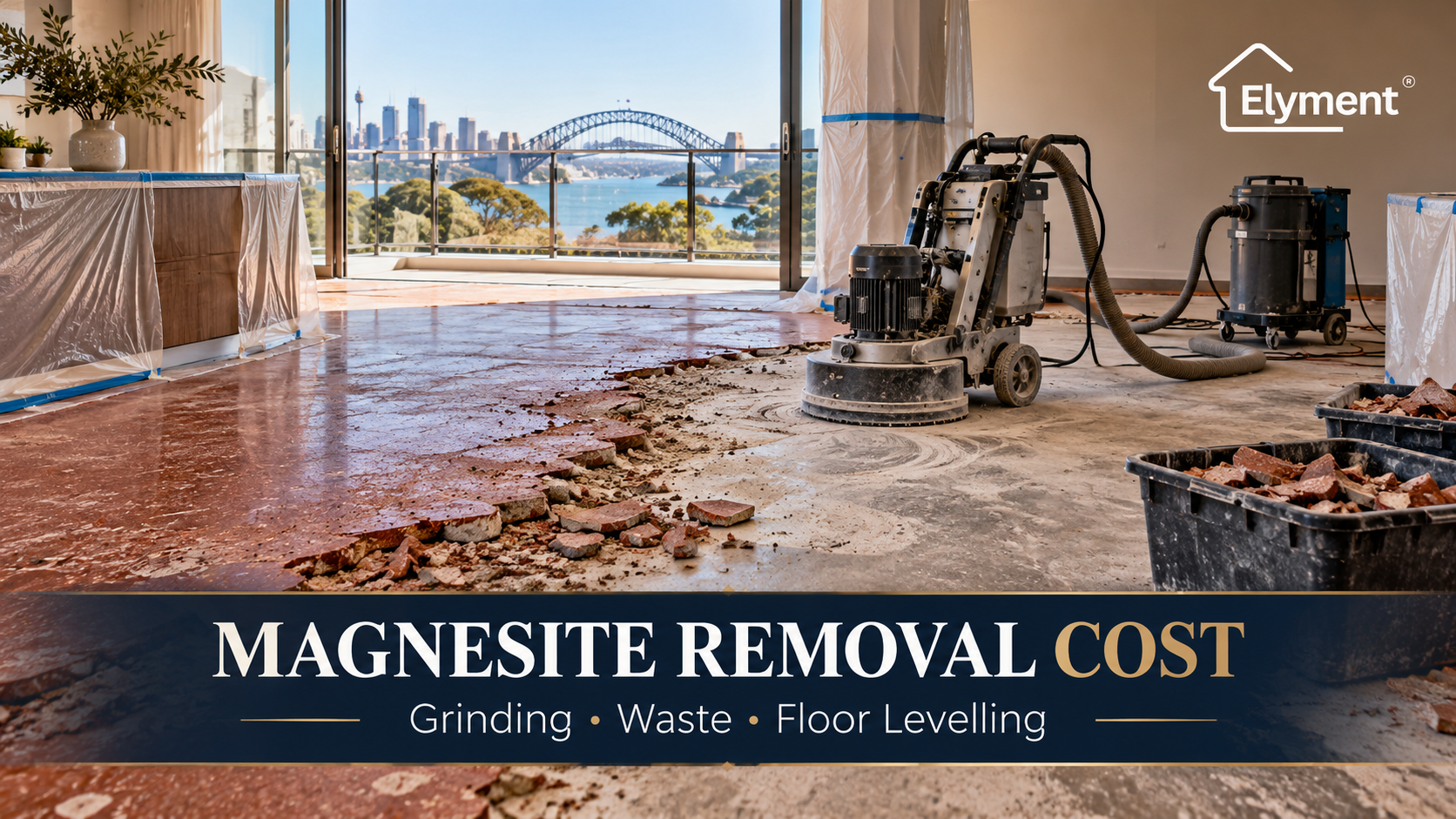
Tile removal cost in Sydney depends on the actual work quoted, not simply the floor area. Elyment's recorded project quotations include approximately 55 m² of tile removal, disposal and grinding for $4,400 including GST, and 30 m² of slate removal and grinding for $3,850 including GST. Sydney owners should compare demolition, waste, grinding, access assumptions, exclusions and NSW strata requirements before accepting a price.
The Numbers Are Real. The Scopes Are Not Identical.
A Sydney property owner comparing tile removal quotations may reasonably start with the total price. It is the figure that affects the renovation budget and determines whether the project can proceed.
Yet two genuine quotations can be difficult to compare, even when both include removal and concrete grinding. Different materials, preparation requirements, disposal arrangements and property access conditions change the amount of work behind the number.
Elyment's project quotation records illustrate the distinction. One approximately 55-square-metre scope was quoted at $4,400 including GST. Another involved approximately 30 square metres of slate removal and diamond grinding for $3,850 including GST.
Those figures are not Sydney-wide price ranges. They are specific quotations prepared for different properties and defined working conditions. Neither establishes the cost of removing every kind of tile, working in every apartment, or delivering a completely level finished substrate.
The commercial question is therefore what each quotation actually purchased, and what remained outside its scope.
Inside Elyment's Tile Removal Quotation Records
The following examples distinguish documented quoted prices from preliminary project scopes. They should not be interpreted as current fixed rates, completed project invoices or evidence that every quoted project proceeded.
Elyment tile removal and floor preparation examples from 2026 project records
Glen Alpine, NSW
- Area: Approximately 55 m²
- Recorded scope: Tile removal, disposal and concrete grinding, including identified tiled skirting details.
- Price: $4,400 including GST.
- Commercial distinction: Combined removal and grinding quote; additional substrate treatments require separate scope confirmation.
Blacktown, NSW
- Area: Approximately 30 m²
- Recorded scope: Mechanical slate removal, adhesive preparation, diamond grinding, protection, debris disposal and cleanup.
- Price: $3,850 including GST.
- Commercial distinction: Based on good access, parking and electricity; levelling and major repairs specifically excluded.
Larger Sydney Removal Enquiry
- Area: Approximately 95 m²
- Recorded scope: Tile removal and disposal, mechanical adhesive grinding and a subsequent levelling assessment.
- Price: Not stated.
- Commercial distinction: The levelling requirement was to be assessed rather than assumed included in the initial preparation scope.
These examples are useful precisely because they do not produce a universal tile removal cost per square metre. Each describes a different package of labour, machinery, disposal and preparation.
Dividing the totals by floor area would produce arithmetic comparisons, but it would conceal the conditions that determined the original prices. A credible estimate should not treat those calculated figures as interchangeable market rates.
Glen Alpine: What Was Included in the $4,400 Quote?
An October 2026 Elyment quotation for Glen Alpine concerned approximately 55 square metres of tile removal and disposal, together with concrete grinding.
The recorded scope identified 300 mm square tiles and 200 mm tiled skirting details.
The agreed quotation amount was $4,400 including GST.
The Documented Work Package
- Mechanical removal of the existing tiled finish across the nominated area.
- Removal and disposal of the demolished tile material.
- Concrete grinding as part of the floor preparation scope.
- Attention to the identified tiled skirting sections forming part of the removal requirements.
Importantly, the available quotation summary does not establish that comprehensive floor levelling, waterproofing reconstruction, structural slab repairs or hazardous-material remediation were included. Those items should not be added to the published scope without reference to the complete quotation.
This distinction matters when comparing tile removal and grinding cost. Grinding can remove residual adhesive and prepare concrete, but it does not automatically correct every depression, slab variation or damaged section.
A project can therefore have a legitimate, competitively priced removal-and-grinding quotation without having a confirmed price for every treatment the exposed substrate might subsequently need.
Blacktown: Why a Smaller Slate Floor Was Quoted at $3,850
A March 2026 Elyment quotation in Blacktown covered approximately 30 square metres of existing slate flooring across kitchen and living areas.
The quotation total was $3,500 excluding GST, or $3,850 including GST.
Unlike a generic tile-only demolition allowance, this quotation defined a broader preparation package.
Included in the Quoted Work
- Mechanical removal of existing slate flooring.
- Removal of residual adhesive and high spots as required within the nominated preparation.
- Diamond grinding of the concrete slab to prepare for replacement flooring.
- Protection of one set of built-in shelves.
- Dust control using H-Class vacuum equipment.
- Bagging, loading and offsite disposal of demolition debris.
- Basic site cleanup.
Conditions Supporting the Quoted Price
The quotation assumed good access, available parking, onsite electricity and a cleared working area.
The client had identified convenient street access and a relatively short movement distance to the property. Those details helped define the machinery and waste-handling assumptions.
Explicit Exclusions
- Self-levelling compounds.
- Substantial patching or feather finishing.
- Crack repairs and moisture mitigation.
- Skirting removal and reinstallation.
- Furniture and whitegoods relocation.
- Supply and installation of new flooring.
Additional preparation outside the original scope required separate approval.
The relevance is not that slate removal always costs more than ceramic tile removal. The evidence does not establish that conclusion.
Instead, this quotation demonstrates why material, protection requirements, machine work, disposal and exclusions must be read together before comparing one contractor's price with another.
The 95 m² Scope: A Useful Example Without a Published Price
A separate September 2026 Sydney project scope concerned approximately 95 square metres of tile removal and disposal, followed by mechanical grinding of the exposed slab to address adhesive residue.
The scope also required an assessment of whether subsequent floor levelling was necessary.
This is an important commercial distinction. The initial work package identified demolition, waste handling and grinding. The requirement for levelling was to be established after the underlying surface could be assessed.
The documented client preparation responsibilities also included protection of vulnerable items such as kitchen surfaces and blinds.
However, protecting furnishings does not replace the contractor's responsibility to manage demolition dust and worker exposure through appropriate work controls.
No verified monetary total is presented for this example. Publishing a guessed price would turn a genuine work scope into a misleading case study.
Its value is different: it demonstrates how a quotation can establish a firm demolition and preparation boundary while reserving the right to assess concealed substrate conditions.
A Better Way to Compare Two Tile Removal Quotes
Once the work is divided into identifiable components, the total price becomes easier to interpret.
Consider a property owner comparing a quotation that includes tile removal and grinding with another quotation that includes tile removal only.
The cheaper figure may reflect a narrower scope, rather than more efficient delivery.
Quote Component Comparison
Tile Uplift
- What to establish: Tile type, measured area, assumed layers and demolition boundary.
- Why it matters: Different materials and build-ups require different removal methods.
Adhesive Removal
- What to establish: Whether mortar and residual adhesive are removed or left for the next trade.
- Why it matters: An exposed floor is not necessarily a prepared substrate.
Concrete Grinding
- What to establish: Area, purpose, edge treatment and required surface condition.
- Why it matters: Preparation grinding and decorative polishing are different deliverables.
Disposal
- What to establish: Loading, transport, bins, waste classification and disposal.
- Why it matters: Waste may otherwise become an additional labour or logistics charge.
Building Access
- What to establish: Stairs, lifts, parking, loading restrictions and protection.
- Why it matters: These conditions affect working time and equipment movements.
Subfloor Rectification
- What to establish: Levelling, repairs, moisture treatment and associated materials.
- Why it matters: Often cannot be confirmed fully until the original flooring is removed.
Next-Floor Readiness
- What to establish: Written handover condition and the next installer's requirements.
- Why it matters: Prevents gaps between demolition and flooring installation scopes.
Elyment's tile removal and adhesive grind-back service in Sydney provides additional detail on the demolition and preparation pathway.
For more complex substrates, the separate analysis of concrete grinding costs after floor removal explains why the exposed slab can change the actual preparation requirement.
Apartment Rules Can Change the Work Package Before Demolition Begins
Sydney strata projects introduce obligations that may not apply in the same way to a detached house with direct driveway access.
The NSW Government's strata renovation guidance distinguishes cosmetic, minor and major renovations.
Installing or replacing hard flooring generally falls within the minor renovation approval framework, while work involving waterproofing or structural changes may require the major renovation pathway. The complete proposed works and scheme by-laws determine the relevant requirements.
Approval is not simply a question of whether a contractor may enter the apartment. A building manager may also require information about machinery, permitted work times, lift protection, loading arrangements and demolition waste handling.
What the Quotation Needs to Establish
- Whether access is through a service lift, passenger lift or stairs.
- Who books the lift and supplies any required protection materials.
- Whether a suitable waste-loading point is available.
- What hours are permitted for noisy demolition and grinding.
- Whether contractor induction or insurance evidence is required.
- Whether the proposed new hard floor requires acoustic evidence or additional strata approval.
- What happens if the approved demolition date changes or further work becomes necessary.
Access restrictions should be addressed before the price is finalised. A quotation prepared around unrestricted work hours cannot automatically be applied to a property where machinery and waste movements are confined to short booking windows.
This is not an argument that apartment work must always be more expensive. It is an argument that the applicable building conditions should be visible in the scope and cost assumptions.
Waste Disposal Is Both a Cost Item and an Accountability Issue
Removed tiles, mortar and adhesive can form a substantial construction waste stream. Their handling requirements depend on material composition, waste classification, site access and the receiving facility.
A quotation that says "removal included" may not explain whether the contractor will also load, transport and dispose of the material.
The distinction should be resolved in writing. A complete disposal scope identifies who is responsible for moving debris off the work area, whether a skip or vehicle load is required, and how offsite disposal will be managed.
The NSW Environment Protection Authority's construction and demolition waste guidance provides the regulatory context for appropriate waste management.
A sensible quote should also establish how the contractor will respond to unidentified or potentially hazardous materials.
Suspected asbestos-containing materials should not be treated as ordinary tile debris. Identification and any required specialist handling must be resolved before affected work proceeds.
This is particularly relevant where older flooring assemblies conceal previous sheet products, adhesive layers or refurbishment materials.
Grinding Should Be Priced Against a Defined Handover Condition
The words "tile removal and grinding" establish two activities, but they do not necessarily establish the finished condition required by the replacement flooring installer.
A mechanically ground slab may still need crack treatment, patching, moisture testing or self-levelling compound.
The subsequent specification depends on the selected floor system and the condition revealed after demolition.
The three practical handover descriptions are:
1. Removal complete: Existing tiles have been lifted and the nominated demolition waste has been cleared.
2. Preparation grinding complete: The specified adhesive residue and high spots have been treated to the agreed grinding scope.
3. Installation-ready substrate: The floor has been assessed and prepared against the actual requirements of the proposed flooring system, including any separately required repairs, testing or levelling.
These are different commercial deliverables. Quoting one does not prove the others have already been included.
Property owners planning a replacement floor can review Elyment's apartment floor levelling and substrate preparation information before finalising the handover between trades.
Where levelling is needed, the new flooring manufacturer's substrate tolerances and preparation requirements should guide the specification, rather than assuming that grinding alone achieves the necessary standard.
Dust Controls Belong in the Quoted Method, Not an Informal Promise
Tile removal and concrete grinding can generate hazardous respirable dust from silica-containing materials.
SafeWork NSW's silica construction guidance identifies practical measures such as suitable on-tool extraction, wet methods where appropriate, exclusion zones, respiratory protection and appropriate dust cleanup.
For apartment projects, the quotation should define the controls appropriate to the proposed work and building environment. No demolition process should be advertised as entirely dust-free.
Owners should distinguish between protecting household contents and managing occupational exposure. These are connected responsibilities, but they are not interchangeable.
What Should Be Verified Before Approving the Quote?
A practical quotation review can be completed against six commercial decisions.
1. Confirm the measured area. Identify the rooms, tiled skirtings, edges, thresholds and any excluded zones.
2. Confirm the removal boundary. Establish whether the work includes tile only, adhesive, mortar, screed or additional layers where present.
3. Confirm disposal. Check that loading, transport and lawful disposal are included or separately priced.
4. Confirm grinding and handover. Define which surface preparation work is included and what remains subject to inspection.
5. Confirm building arrangements. Resolve strata permissions, access bookings, parking, noisy-work windows and protection.
6. Confirm variations and payment terms. Identify excluded work and require written approval for additional costs.
Residential work must also be assessed against applicable NSW contractual requirements. The NSW Government's residential building contract guidance explains relevant written contract, deposit and variation obligations.
Where the statutory residential building contract regime applies, deposits are generally capped at 10% of the contract price. Owners and contractors should ensure that payment arrangements comply with the law applicable to the specific work, rather than relying on informal booking terms.
Project Cost Management Starts With Scope Evidence
The operational lesson from the Glen Alpine and Blacktown quotations is not that one Sydney suburb has a particular tile removal rate or that a particular floor area guarantees a particular total.
It is that the price should be read alongside a record of the removal materials, machinery, waste disposal, access conditions, preparation requirements and explicit exclusions.
When those details are documented, property owners can distinguish a change in the quoted work from a simple difference in contractor pricing.
Builders and project managers also gain a clearer basis for scheduling subsequent trades. They can establish whether demolition is complete, whether the substrate has been ground and whether further levelling or repairs must be approved before the flooring installation starts.
That evidence matters more than trying to convert a small collection of unrelated quotations into a universal Sydney price list.
Know the Scope. Understand the Cost.
SYDNEY TILE REMOVAL & PROJECT DELIVERY
Review tile removal, waste disposal, grinding, strata conditions and subfloor preparation before committing to your renovation programme.
REMOVAL • GRINDING • DISPOSAL • PROJECT COORDINATION
The Price Is Only Useful When the Deliverable Is Clear
Elyment's recorded Sydney quotations demonstrate how genuine project prices reflect specific combinations of demolition, disposal and surface preparation.
The approximately 55-square-metre Glen Alpine quote of $4,400 including GST and the 30-square-metre Blacktown slate removal quote of $3,850 including GST should not be compared without their underlying scopes.
Sydney property owners should instead expect clear answers to three matters: what the contractor will remove, what condition will be handed to the next trade, and which additional costs require further approval.
Those answers turn a tile removal quote from a standalone number into a practical project delivery document.
Sources and References
Government and Regulatory Sources
- NSW Government: Strata renovations
- NSW Environment Protection Authority: Construction and demolition waste
- SafeWork NSW: Managing silica in construction
- NSW Government: Residential building contracts
Elyment Services and Related Articles
- Elyment: Tile Removal and Adhesive Grind-Back Sydney
- Elyment: Concrete Grinding Cost Sydney — Why Per-Square-Metre Prices Change After Floor Removal
- Elyment: Apartment Floor Levelling and Substrate Preparation Sydney
- Elyment: Request a Project Review
Internal Project Records Referenced
- Glen Alpine, NSW — October 2026 tile removal and concrete grinding quotation, approximately 55 m².
- Blacktown, NSW — March 2026 slate removal and diamond grinding quotation, approximately 30 m².
- Larger Sydney removal enquiry — September 2026 project scope, approximately 95 m².
Know the Scope. Understand the Cost.
Review tile removal, waste disposal, grinding, strata conditions and subfloor preparation before committing to your renovation programme.
Request a Project Review REMOVAL • GRINDING • DISPOSAL • PROJECT COORDINATIONRelevant next actions
Explore the ELYMENT service most closely connected to this article.