Smoke Alarm Going Off While Cooking? Sydney Electrician Checks
If your smoke alarm keeps sounding while cooking, review placement, airflow and cleaning. Reduce nuisance alerts while keeping your home's fire safety in focus.
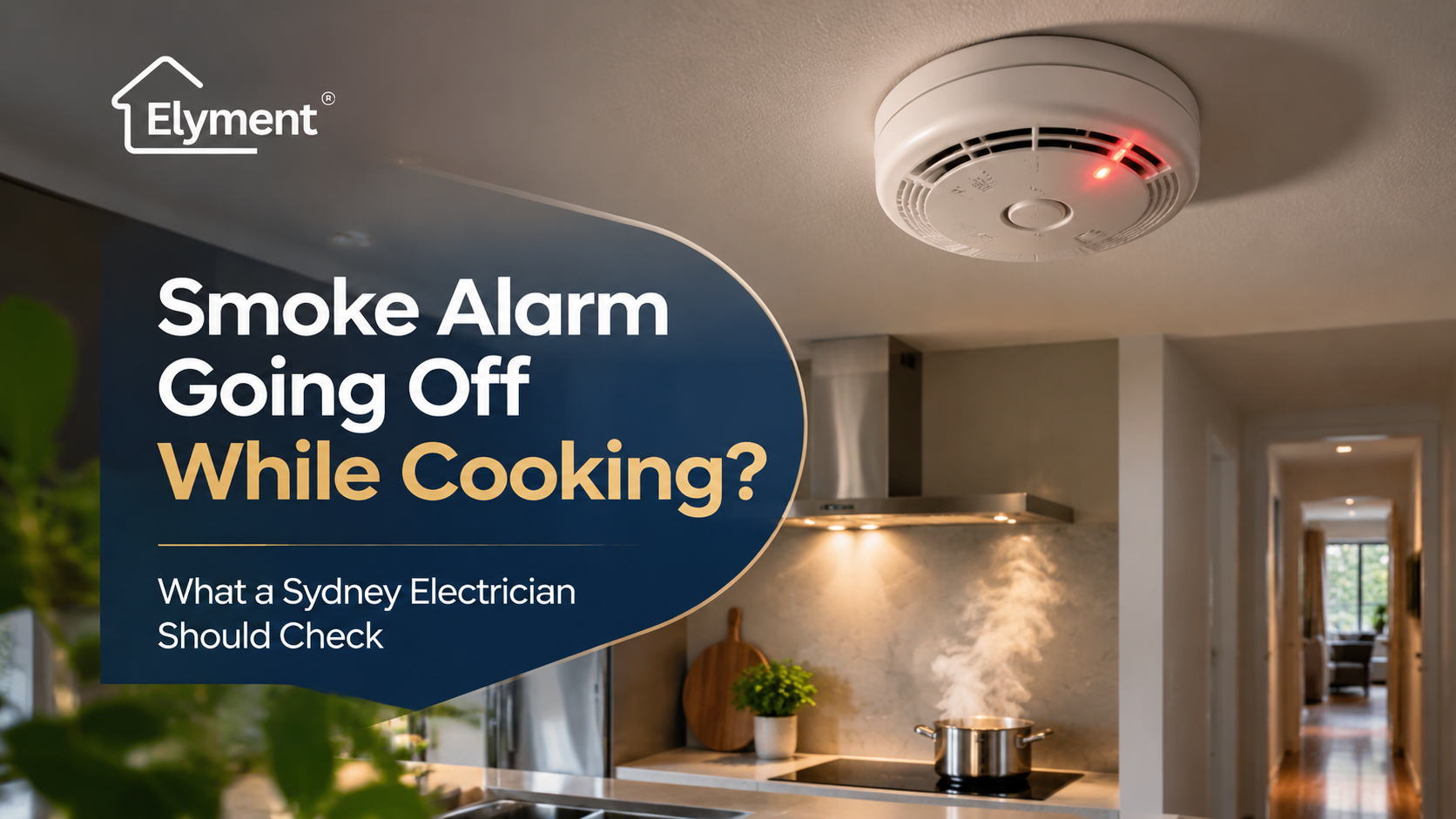
When a smoke alarm repeatedly sounds during cooking in a Sydney home, a licensed electrician should identify which unit triggered and check its age, condition, sensor type and position. Cooking fumes or steam can reach a hallway alarm, particularly in an open-plan layout. Keep the alarm working and have recurring activations assessed. Any change to its position must preserve the smoke alarm coverage required near sleeping areas and on each level.
If you suspect a fire or are unsure why the alarm is sounding, get everyone out, stay out and call Triple Zero (000) from outside. Follow Fire and Rescue NSW’s home escape guidance.
Find the alarm that started it
In a Sydney apartment, a smoke alarm outside the bedrooms may sound every time someone sears food in the open-plan kitchen. In a two-storey terrace with interconnected alarms, the loudest unit may be upstairs even though a downstairs unit detected the cooking fumes first. The electrician needs to find the initiating alarm before deciding which unit, if any, needs work.
Once everyone is safe and the event has ended, note what was cooking, whether the rangehood was running and which alarms sounded. A brief chirp at intervals can indicate a low battery, a fault or an end-of-life warning, depending on the model. A full alarm during cooking is a different symptom. Some units retain a model-specific light pattern after activation. The electrician can interpret it using the manufacturer’s instructions. Clipsal’s troubleshooting guide shows how such indicators work on its equipment.
Check the unit, then check what reaches it
What a nuisance-alarm assessment should cover
Age and condition
- What the electrician looks for: Manufacture or replacement date, visible damage, dust, insects, paint over the openings and any battery or fault indication.
- What it can change: Whether the unit needs manufacturer-approved maintenance, a serviceable battery replacement or a new alarm.
Sensor type and system
- What the electrician looks for: The sensor type, model, power source, any alert history and how the unit communicates with other alarms.
- What it can change: Whether a compatible photoelectric smoke alarm is suitable if replacement is needed, and what interconnection tests are required.
Position and airflow
- What the electrician looks for: Where the alarm sits in relation to the cooktop, rangehood, air-conditioning outlets and bedroom doors.
- What it can change: Whether a change to extraction or an approved alarm position could reduce recurring activations while preserving the required coverage.
Fire and Rescue NSW’s maintenance guidance advises replacing smoke alarms every 10 years, or earlier if the manufacturer specifies. A replacement may resolve an ageing or faulty unit. If cooking fumes still travel directly to the same ceiling location, the electrician should assess the position and airflow as well. Fire and Rescue NSW’s residential research identifies alarm location, number and interconnection as important to effective warning.
Keep the bedroom warning when the kitchen layout changes
Fire and Rescue NSW’s installation guide advises avoiding positions in or near kitchens and bathrooms. Its summary of NSW smoke alarm requirements also explains that alarms are required on every level and that their position matters near bedrooms. Before relocating an alarm, the electrician should check both the layout and the applicable requirements for that dwelling. Hardwired alarm work requires a licensed electrician.
Consider an Inner West terrace where a renovation removes the kitchen door and shifts the cooktop to an island. The original hallway alarm can remain in the same spot while its exposure to cooking fumes changes. If work is still underway, have the electrician and kitchen installer review the cooktop, extraction and alarm positions on the same plan before the ceiling is finished. Elyment’s guides to electrical planning for an induction cooktop and coordinating a ducted return-air grille during renovation cover related decisions that can affect the ceiling scope.
Keep the alarm working between incidents
Removing a battery, covering an alarm or disconnecting it can take away the early warning residents need when they are asleep. If the cause is positively identified as ordinary cooking fumes and conditions are safe, use the alarm’s temporary hush function only as directed by the manufacturer, where fitted. Repeated activations warrant an assessment. Fire and Rescue NSW also advises staying in the kitchen while cooking.
In a NSW rental, report a suspected malfunction promptly to the landlord or agent. If the property is in strata, check whether the landlord has advised in writing that the owners corporation is responsible for repair or replacement. The NSW Government’s rental smoke alarm guidance explains who arranges the work.
After any repair or relocation, ask the electrician to confirm the affected alarms were tested, including interconnection where fitted. If the inspection leads to a replacement quote, Elyment’s Sydney smoke alarm replacement and upgrade guide explains how the scope can differ.
Review the alarm layout before changing it
Share the kitchen and bedroom layout, where the alarm is mounted and when it tends to sound. Elyment can help scope a licensed electrical assessment and coordinate related renovation work in Sydney.
Sources and references
- Fire and Rescue NSW: Home escape guidance
- Clipsal: Smoke alarm troubleshooting guide
- Fire and Rescue NSW: Smoke alarm maintenance guide
- Fire and Rescue NSW: Smoke alarms in homes – Research
- Fire and Rescue NSW: Smoke alarm installation guide
- Fire and Rescue NSW: NSW smoke alarm requirements
- Elyment: Induction cooktop installation and switchboard upgrades
- Elyment: Moving a ducted air-conditioning return-air grille
- Fire and Rescue NSW: Cooking fire safety
- NSW Government: Smoke alarms in rental properties
- Elyment: Smoke alarm installation cost Sydney – Replacement or upgrade